
PSHE
PSHE stands for Personal, Social, Health and Economic Education and aims to provide children with the knowledge and skills to keep themselves happy, healthy and safe, as well as to prepare them for life and work. PSHE aims to give children the knowledge, skills and understanding they need to lead confident, healthy and independent lives.
PSHE Intent
At Knowsley Junior School, our PSHE curriculum, delivered through the KAPOW scheme, aims to develop well-rounded, resilient, and responsible students. We focus on nurturing their physical, emotional, and social well-being, equipping them with the knowledge and skills necessary for healthy, safe, and fulfilling lives. Our curriculum emphasises core values of respect, responsibility, and empathy, preparing children to thrive in modern society. By promoting mental and physical health, healthy relationships, and active citizenship, we ensure children are well-prepared for the challenges and opportunities of the future. We may adapt the content of some lessons to meet the needs of the children.
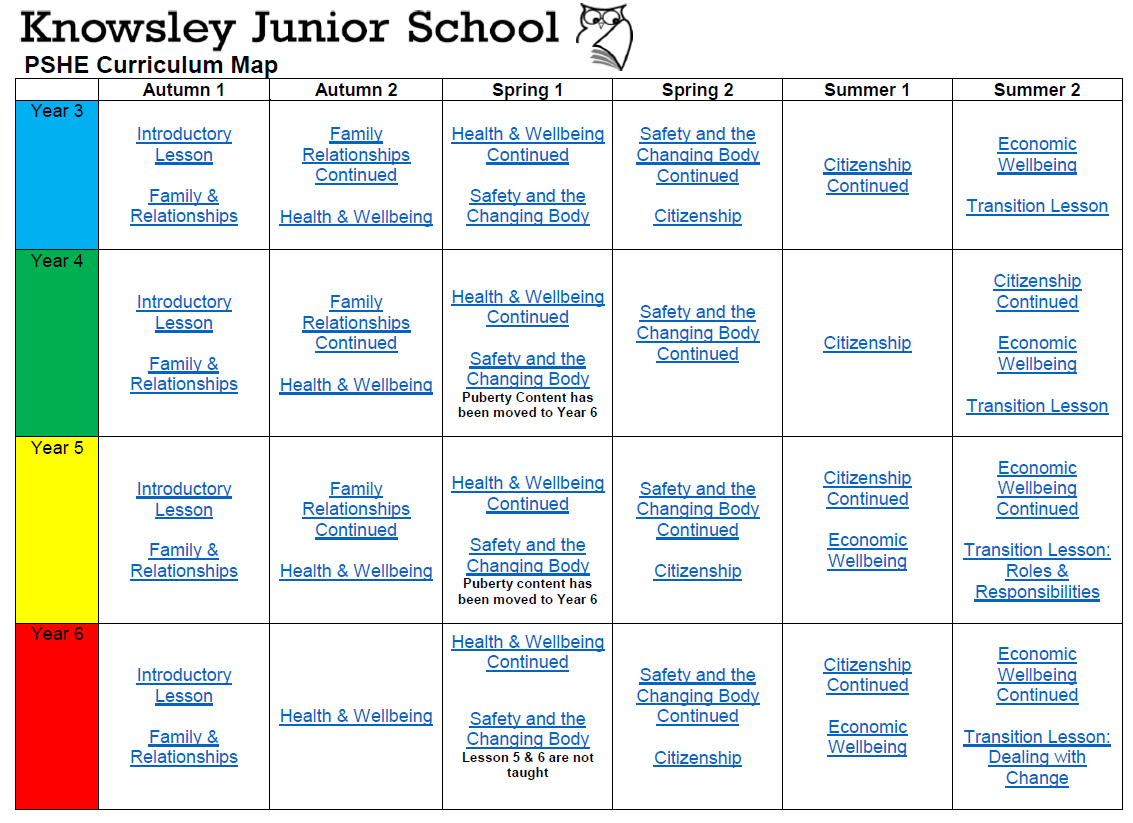
Implementation: PSHE
Our PSHE curriculum is structured into themed units covering Health and Well-being, Relationships, Living in the Wider World, and RSE (Relationships and Sex Education). Weekly lessons provide consistent learning opportunities, supplemented by special events and themed weeks for deeper engagement. Interactive teaching methods such as discussions, role-playing, and hands-on activities make learning dynamic and relevant. We encourage our pupils to develop their sense of self-worth by playing a positive role in contributing to school life and the wider community. We challenge all of our pupils to look for opportunities to reflect on our Rights Respecting Charter and think about both their rights and responsibilities. Weekly assemblies and themed weeks such as Healthy Me, Healthy Planet and Children’s Mental Health Week are linked to PSHE, British Values and SMSC and cover any additional sessions that would benefit the whole school.

|
PSHE & RSE Skills & Knowledge in Year 3 | [pdf 66KB] |

|
|
|
PSHE & RSE Skills & Knowledge in Year 4 | [pdf 63KB] |
|
|
|
PSHE & RSE Skills & Knowledge in Year 5 | [pdf 158KB] |
|
|
|
PSHE & RSE Skills & Knowledge in Year 6 | [pdf 159KB] |
|
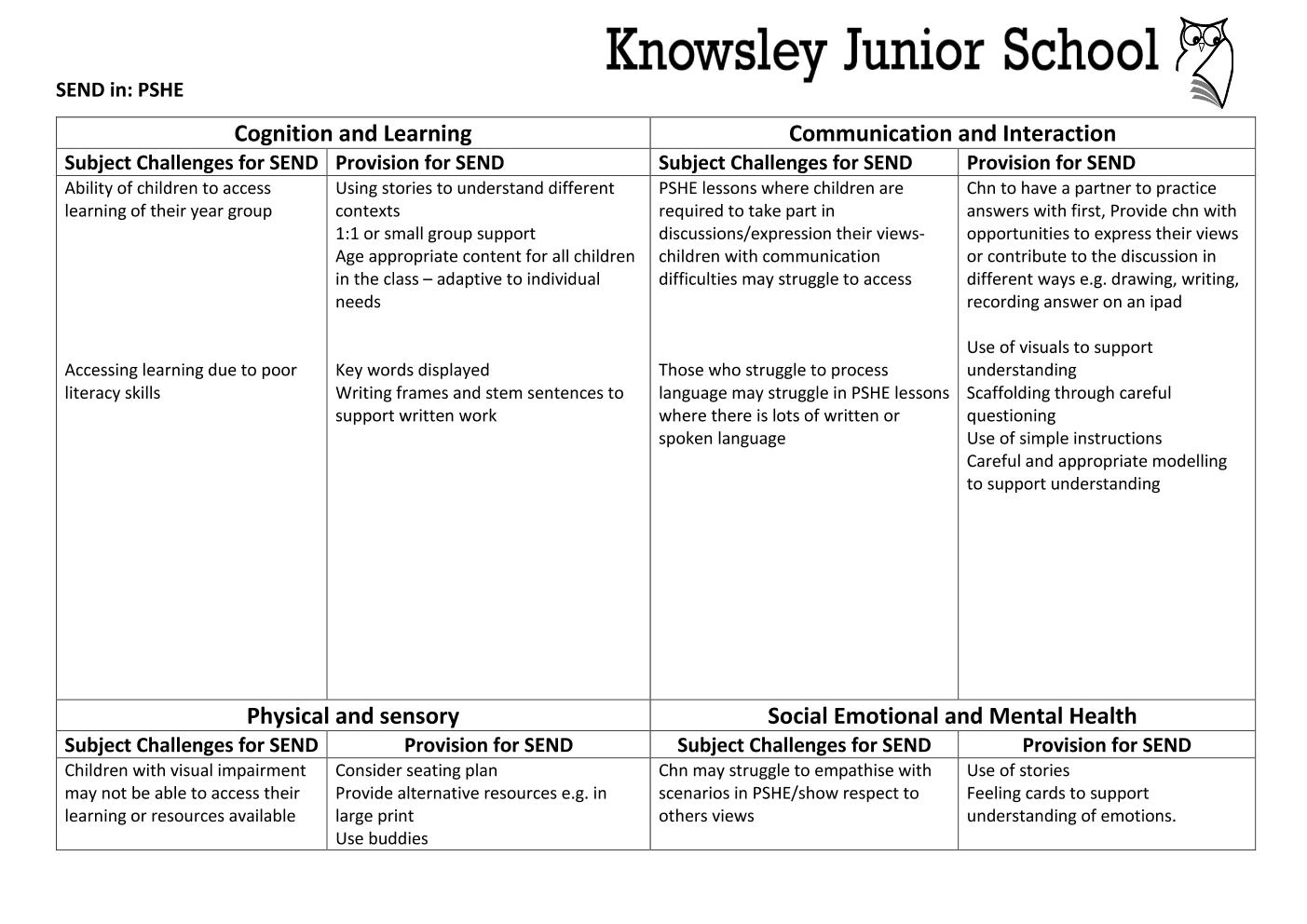
Special Educational Needs: PSHE
Impact
By the time our children leave our school they will:
- be able to approach a range of real life situations and apply their skills and attributes to help navigate themselves through modern life
- be on their way to becoming healthy, open minded, respectful, socially and morally responsible, active members of society
- appreciate difference and diversity
- recognise and apply the British Values of Democracy, Tolerance, Mutual respect, Rule of law and Liberty
- be able to understand and manage their emotions
- be able to look after their mental health and well-being
- be able to develop positive, healthy relationships with their peers both now and in the future
- understand the physical aspects involved in RSE at an age appropriate level
- have respect for themselves and others
- have positive self esteem.

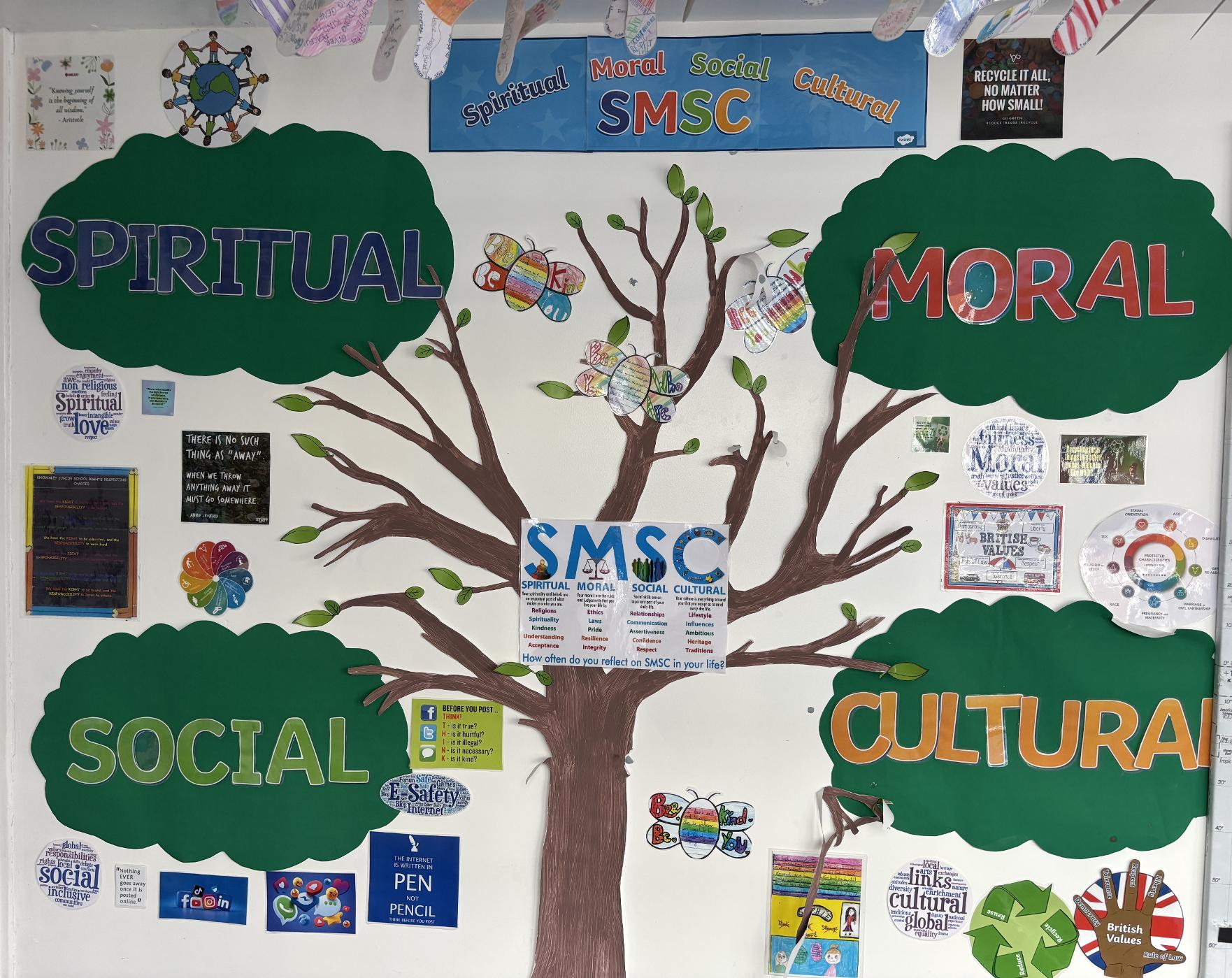
Spiritual, Moral, Social and Cultural (SMSC) Curriculum
Spiritual, Moral, Social and Cultural (SMSC) development is the over-arching umbrella that encompasses personal development across the whole curriculum. As defined in the Ofsted School inspection handbook, Spiritual, Moral, Social and Cultural means:
The spiritual development of pupils is shown by their:
- ability to be reflective about their own beliefs (religious or otherwise) and perspective on life
- knowledge of, and respect for, different people’s faiths, feelings and values
- sense of enjoyment and fascination in learning about themselves, others and the world around them
- use of imagination and creativity in their learning
- willingness to reflect on their experiences.
The moral development of pupils is shown by their:
- ability to recognise the difference between right and wrong and to readily apply this understanding in their own lives, recognise legal boundaries and, in so doing, respect the civil and criminal law of England
- understanding of the consequences of their behaviour and actions
- interest in investigating and offering reasoned views about moral and ethical issues and ability to understand and appreciate the viewpoints of others on these issues.
The social development of pupils is shown by their:
- use of a range of social skills in different contexts, for example working and socialising with other pupils, including those from different religious, ethnic and socio-economic backgrounds
- willingness to participate in a variety of communities and social settings, including by volunteering, cooperating well with others and being able to resolve conflicts effectively
- acceptance and engagement with the fundamental British values of democracy, the rule of law, individual liberty and mutual respect and tolerance of those with different faiths and beliefs; they develop and demonstrate skills and attitudes that will allow them to participate fully in and contribute positively to life in modern Britain.
The cultural development of pupils is shown by their:
- understanding and appreciation of the wide range of cultural influences that have shaped their own heritage and that of others
- understanding and appreciation of the range of different cultures in the school and further afield as an essential element of their preparation for life in modern Britain
- ability to recognise, and value, the things we share in common across
cultural, religious, ethnic and socio-economic communities - knowledge of Britain’s democratic parliamentary system and its central role in shaping our history and values, and in continuing to develop Britain
- willingness to participate in and respond positively to artistic, musical, sporting and cultural opportunities
- interest in exploring, improving understanding of and showing respect for different faiths and cultural diversity and the extent to which they understand, accept and respect diversity. This is shown by their respect and attitudes towards different religious, ethnic and socio-economic groups in the local, national and global communities
To view of SMSC Policy please use the link.

PSHE and SMSC National Curriculum and Guidance
 |
The National Curriculum Personal, Social, Health and Economic (PSHE) Education |
|
Statutory Guidance: Relationships and Sex Education (RSE) and Health Education |