

Our Team 2026-27
Teachers: Mrs J. Jackson, Mrs L. Shaw-Murfitt and Mrs E. Oliver
Teaching Assistants: Miss M. Lawson and Mrs G. Barson
Class Governor: Dave Barter
Welcome to Year 3
As your child begins the next chapter of their education in Key Stage 2, we warmly welcome you and your family to Knowsley Junior School. We hope that your child will continue to grow and flourish in an exciting, caring and stimulating environment.
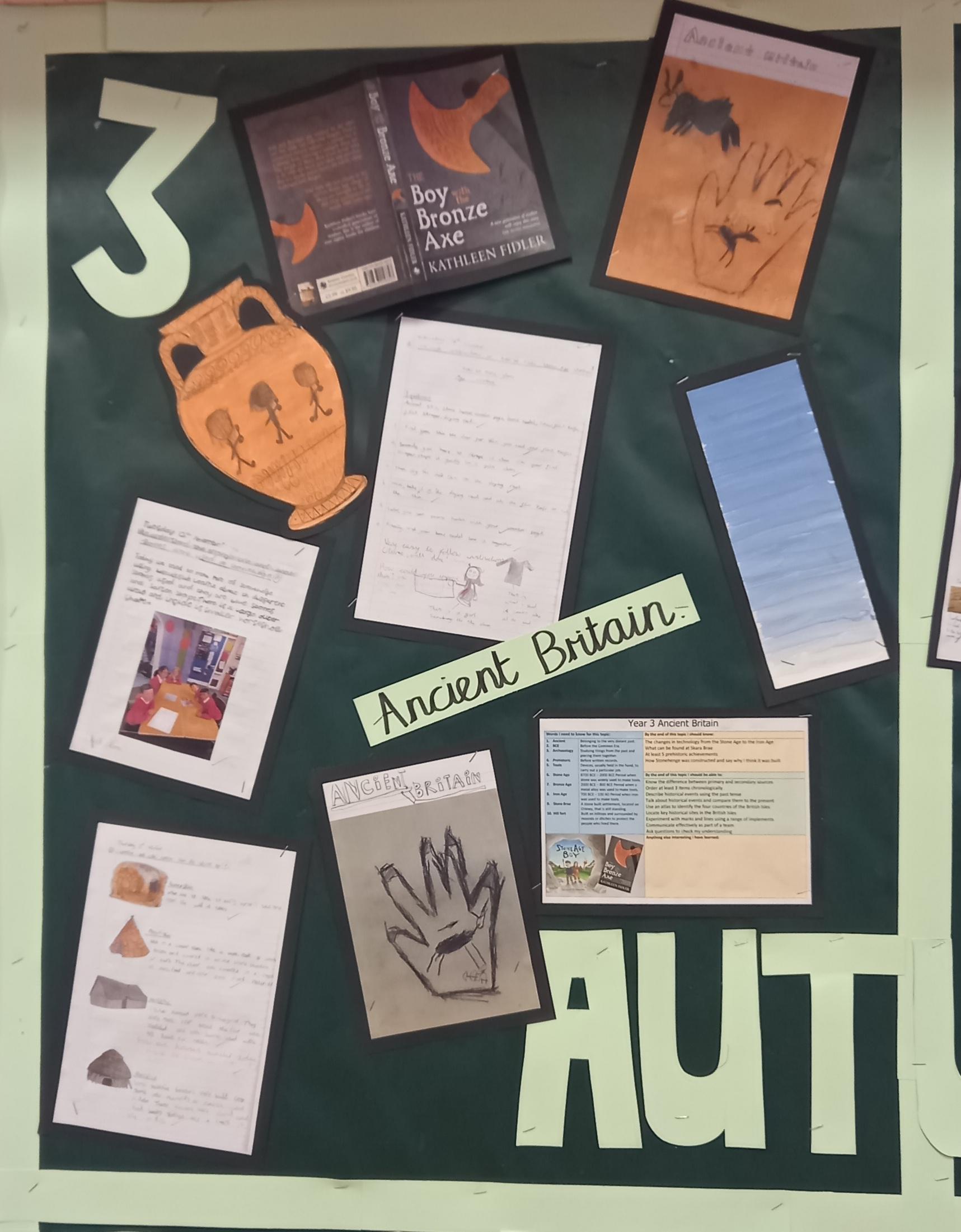
In the autumn term, we enter the exciting world of Ancient Britain, beginning our topic with a look at the Stone Age. We use Cave Baby by Julia Donaldson to consolidate sentence structure and Stone Age Boy by Satoshi Kitamura to further develop narrative and recount writing skills. We also use the topic to inspire a range of art and design work, including cave paintings, and even build our own Stonehenge from biscuits.
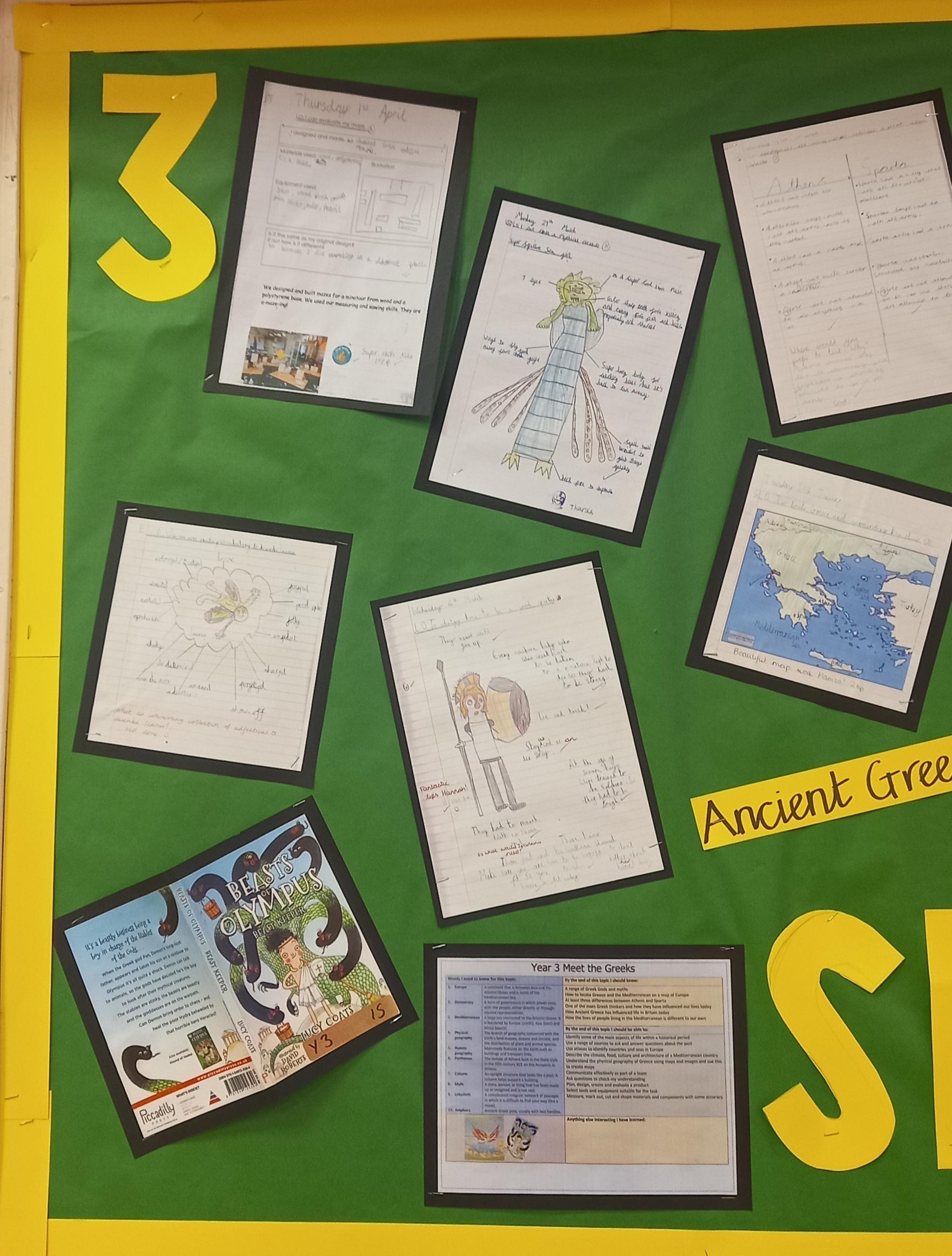
During the spring term, we travel back in time to the era of the Ancient Greeks. We explore Greek myths, art, geography, and the rivalry between Athens and Sparta. To further engage the children with the topic, we hold an exciting Greek Day, giving them an authentic and immersive Ancient Greek experience.
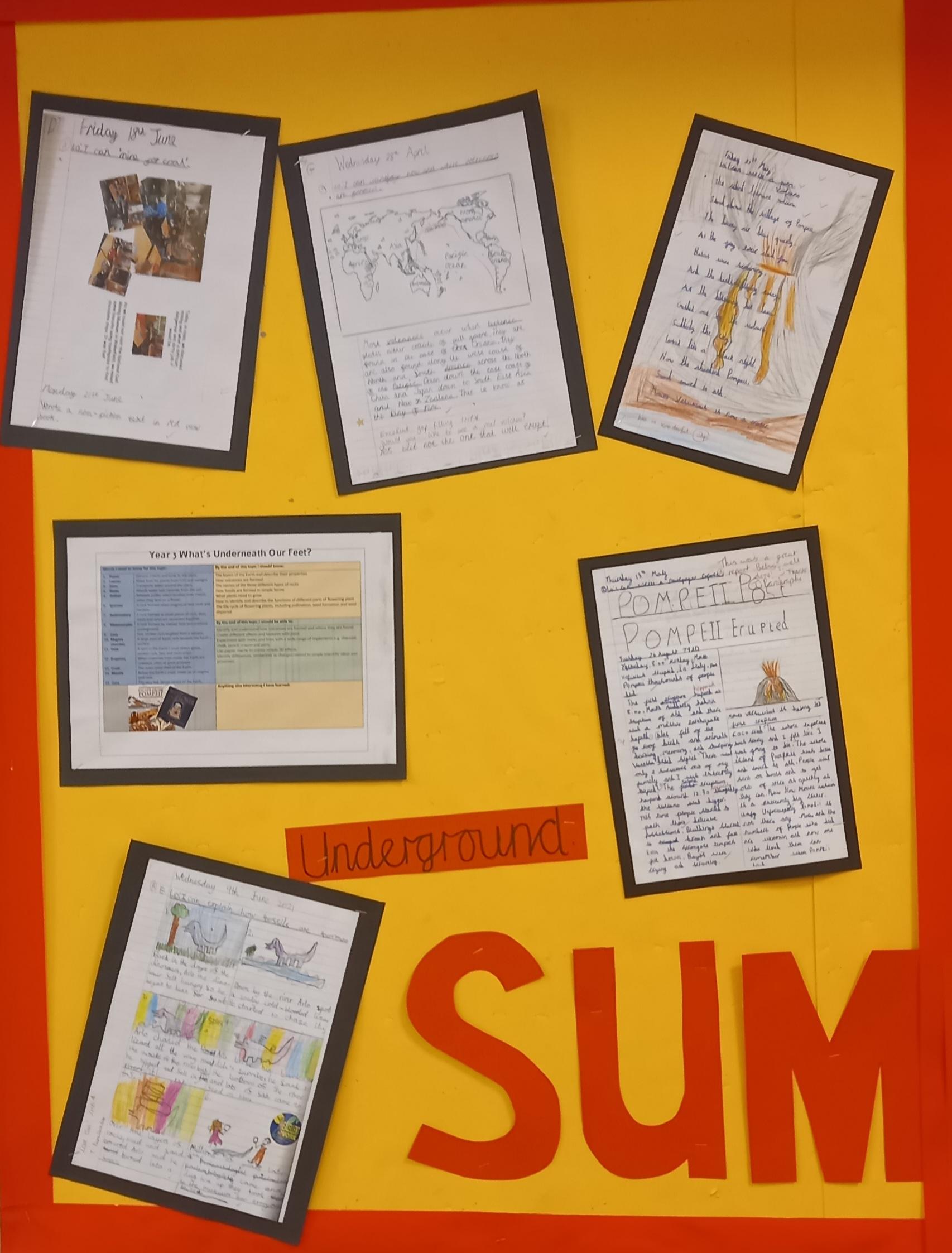
In the summer term, the children discover ‘What Is Under Our Feet?’, where they learn about earthquakes and volcanoes, exploring the infamous eruption of Mount Vesuvius. They also uncover facts about rocks and soils and identify what plants need to grow well. It is during this term that the children visit the National Coal Mining Museum for England. They are given the opportunity to travel 450 feet underground into one of the oldest working mines in England, where they learn about what life was like for miners and their families.
Each of our topics is complemented by carefully chosen, high-quality chapter books during our Book Club sessions, giving children the opportunity to immerse themselves in stories, broaden their understanding of the world and develop a lifelong love of reading.
Year 3 is a busy and exciting year that provides children with a firm foundation as they stride confidently into Year 4.
Your Year 3 Teachers


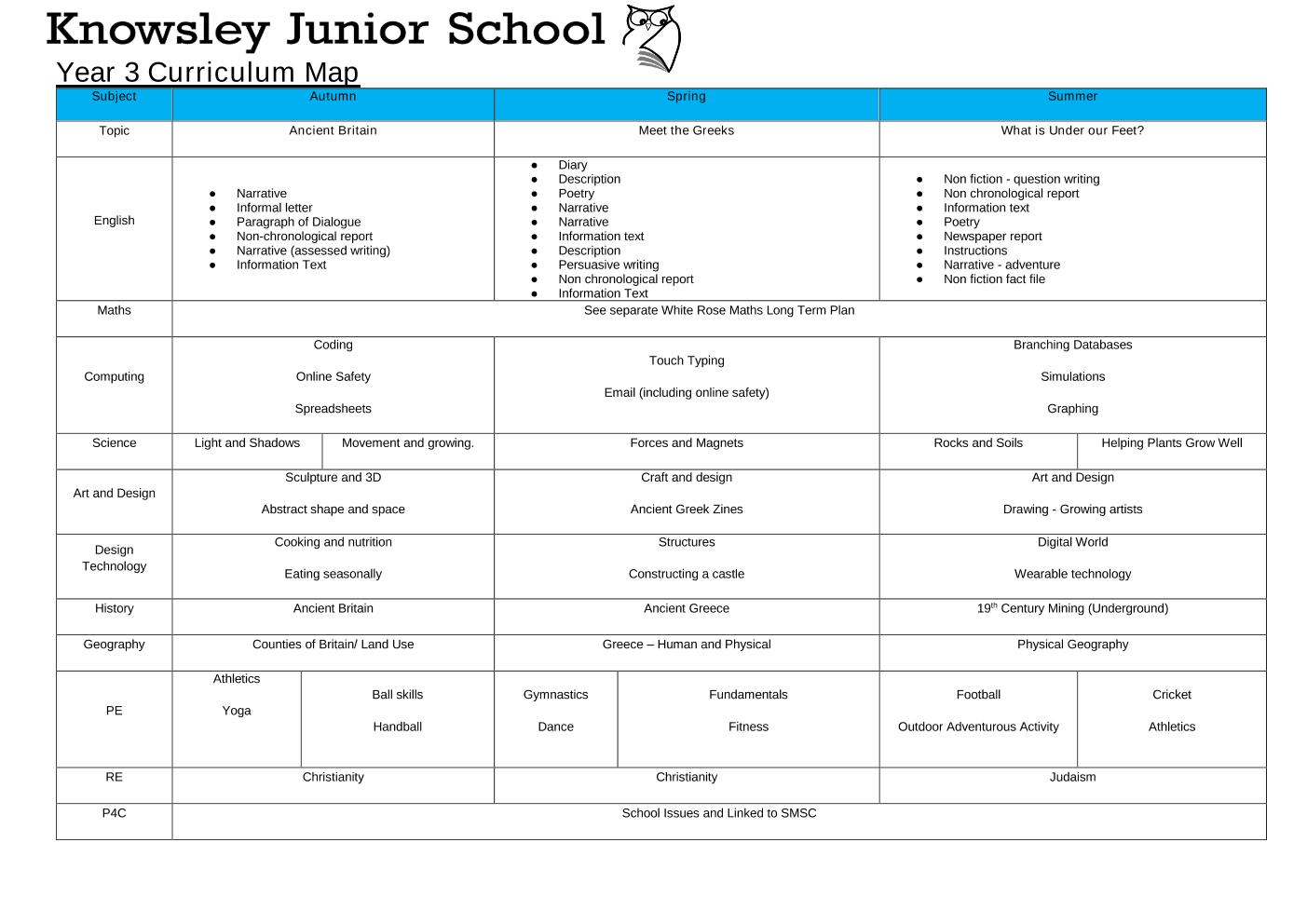
Annual Curriculum Planning
Please select the document below.

|
Year 3 Curriculum Map | [pdf 142KB] |

|
Autumn Term First Half 2026

Autumn Term Second Half 2026
TBA

Autumn Term Home Learning Challenges
At Knowsley Junior School, we know that children achieve their best when home and school work together. This year, we have developed our approach to home learning, informed by research from the Education Endowment Foundation (EEF).
Our home learning activities are designed to be purposeful, manageable and enjoyable, reinforcing classroom learning, encouraging regular reading and helping children practise key skills. We encourage children to complete activities little and often, developing their confidence, independence and positive learning habits.
Please encourage your child to take part and use their school planner to record, share and celebrate their learning at home.
Learning happens everywhere. By working together, we can help our children develop the knowledge, skills and confidence to thrive.

Reading Home Learning Challenges
- Reading Response – after reading your book, how might your favourite character be feeling? Draw a picture of them with a thought bubble to show their emotions.
- Book Club at Home – choose a book and read some together. Discuss the characters, themes and what you think might happen next. Enjoy a drink and some biscuits together at the same time!
- Non-fiction Exploration – Read a newspaper article, biography, information book or science magazine. Summarise the key points or discuss an issue it raises.
- Vocabulary Detective – create a glossary of new or unfamiliar words from your reading. Find out what they mean and try using them in your own sentences.
- Library Challenge – visit your local library and choose a fiction or non-fiction book that interests you or links to something you are learning in school.
Writing and Spelling Home Learning Challenges
- Year 3/4 Spelling Challenge – practise 5 of the Year 3 and Year 4 statutory spelling words. Can you explain their meanings and use them correctly in sentences?
- Research Challenge – find out more about the topic you are studying in school. Can you discover three interesting facts that have not been discussed in class?
- Weekly Journal – write about something you have enjoyed, learned or achieved during the week. Remember to use accurate punctuation and interesting vocabulary.
- Proofreading Challenge – choose a piece of your own writing and improve it. Check spelling, punctuation, sentence structure and whether you could use more ambitious vocabulary.
- Handwriting Grid - trace a line of joins on the handwriting grid that you have been given.
Maths Home Learning Challenges
- Times Tables Rockstar – use TT Rock Stars regularly to improve the speed and accuracy of your multiplication and division facts.
- Daily Maths Workout – try quick-fire times tables, mental maths questions, fractions, decimals or number puzzles. You could use Daily 10 online to help.
- Calculation Challenge – practise the formal written methods for addition, subtraction, multiplication or division.
- Maths in Real Life – use maths while cooking, shopping or completing a job at home. Scale a recipe, calculate a total and change, work out a discount or measure an area.
- Games with Maths – play a game involving numbers, money, coordinates, strategy or problem-solving, such as Monopoly, Battleships, cards or a number game.
Personal Development Home Learning Challenges
- Tie Your Shoelaces – use your own, or borrow a pair of shoes with laces. Can you tie a knot? Can you tie a bow? Ask an adult to help or look online at the different methods you can use, which do you find easiest?
- Pack It Yourself – have a go at packing your own school bag the night before. Check your planner and make sure you have your reading book, homework, PE kit and anything else you need for the next day.
- All About Me – it is important that you know your personal information. What is your full name? When is your birthday? Where do you live? Make sure you can spell everything correctly and be sure not to share this information with strangers or anywhere online.
- Be Road Safe – make sure you know how, where and when to cross the road. Find out the names of the different types of crossings and how they work. Make sure you know the safest place to cross if there isn’t a crossing and what you need to do.
- Stay Safe Online - make a poster to inform your friends about how they can stay safe when they are online. What should they do if they are worried? Who can they tell? Have a look in your planner; there are some ideas on page 94.
- Eat a Balanced Diet – make a note of what you eat for 2 days. Is there a good mixture of food? Have you eaten fruit, vegetables, protein, carbohydrates and fats? Make a note for another 2 days and see if you can improve your balance or keep going if you’re doing well!

Ancient Britain
This topic is the first taught to year 3 as they begin their Knowsley Junior School career. There is limited prior knowledge from Key Stage One to activate. At Springhead Infant School, children study a Prehistoric Creatures unit and learn about cave men in Reception. They should be aware of the countries which make up the British Isles, which will help them to deepen their geography knowledge further by learning about the counties. Pupils studied maps and plans in year 1 and will revisit maps at a more detailed level; a central ability to geographical learning and understanding, which is deepened from the local (Springhead) to the global (examining world continents) throughout Key Stage 2. The knowledge learnt in this topic will help them to access their year 4 Invaders and Settlers topic, with particular reference to contemporary tools and settlements It will develop their sense of chronology and ability to examine both primary and secondary sources, particularly Skara Brae. This skill will assist their investigation of Sutton Hoo in year 4.

Ancient Greece
This topic builds on the children’s historical enquiry skills and their study of events in the past, as well as their geographical locational knowledge. Their prior learning about Britain is extended to the countries of Europe and allows them to compare and contrast both physical and human geography around the Mediterranean, a skill which will be broadened each year. The study of Stonehenge and its construction is compared with that of the Parthenon, making clear links across time and place. In future, these structures will be assessed against pyramids and temples. Design Technology is prominent through children’s construction of a wooden labyrinth, equipping them with skills which will enable them to plan, design, test and evaluate products throughout the key stage. The study of the Ancient Greeks provides children with a contextual foundation for learning about ancient civilizations in year 5 and 6 (Ancient Egypt/ The Maya); myths, beliefs and arts and crafts
 |
School Learning Zone - Ancient Greece |
|
School Learning Zone - Physical and Human Geography |
|
School Learning Zone - The Mediterranean |

What is Underneath our Feet?
The children’s learning in Key Stage One Science (plants) equips them with a basic understanding of the main science driver behind this topic. The children will learn about the Earth, building on their locational knowledge when investigating volcanoes around the globe. The scheduling of this topic in the summer term allows more successful outcomes when growing seeds, working outside to study vegetation and for a more enjoyable trip to the National Coal Mining Museum in Wakefield. Examining fossils and the ruins of Pompeii prepares children for learning about the discovery of Tutankhamun’s tomb in year 5.
The study of Pompeii also equips the children with some knowledge of the Romans in preparation for year 4.
|
School Learning Zone - Angry Earth |
|
School Learning Zone - Plant Life Cycles |
|
School Learning Zone - Pompeii |
|
School Learning Zone - Rocks and Soils (Fossils) |
|
School Learning Zone - Mining |
Year 3 Topic Skills and Knowledge
Year 3 Science Skills and Knowledge
Year 3 begin with Developing our Science Skills before moving into the topics Moving and Growing and Light and Shadows. Children learn about nutrition, skeletons and muscles, the need for light to see, how shadows are formed and patterns in shadow size. In the spring term, they study Forces and Magnets, comparing movement on surfaces, magnetic and non-magnetic materials and magnetic poles. In the summer term, the focus is Rocks and Soils and Helping Plants Grow Well, where children compare rocks and fossils, learn how soil and fossils form, explore plant parts and functions, and investigate what plants need to grow.
|
|
Light and Shadows Learning Outcomes | [pdf 205KB] |
|
|
|
Light and Shadows Topic Mat | [pdf 200KB] |
|
|
|
Moving and Growing Learning Outcomes | [pdf 304KB] |
|
|
|
Moving and Growing Topic Mat | [pdf 287KB] |
|
|
|
Forces and Magnets Learning Outcomes | [pdf 205KB] |
|
|
|
Forces and Magnets Topic Mat | [pdf 194KB] |
|
|
|
Rocks and Soils Learning Outcomes | [pdf 291KB] |
|
|
|
Rocks and Soils Topic Mat | [pdf 279KB] |
|
|
|
Helping Plants Grow Well Learning Outcomes | [pdf 208KB] |
|
|
|
Helping Plants Grow Well Topic Mat | [pdf 198KB] |
|