
2026-27
We are a nut, sesame and pineapple free school.
Your child has the choice of having a school dinner or bringing a packed lunch. The content of our school meals is in line with current healthy eating guidelines, which is a requirement for all schools. We also offer Halal meals.
School dinners cost £2.70 each (£13.50 per week). Our preferred method of payment is via our online system or alternatively, cash or a cheque can be sent to the school office. Dinner money must be paid weekly on a Monday morning at the beginning of the week in which it is due.
Changes from school dinners to packed lunches (and vice versa) can only be made at the beginning of each half term as food for school meals is ordered in advance.
Medical Information
If you have any medical information concerning your child's welfare that you feel is important for the school to know, please notify the school in writing. This includes any food allergies or food intolerances.
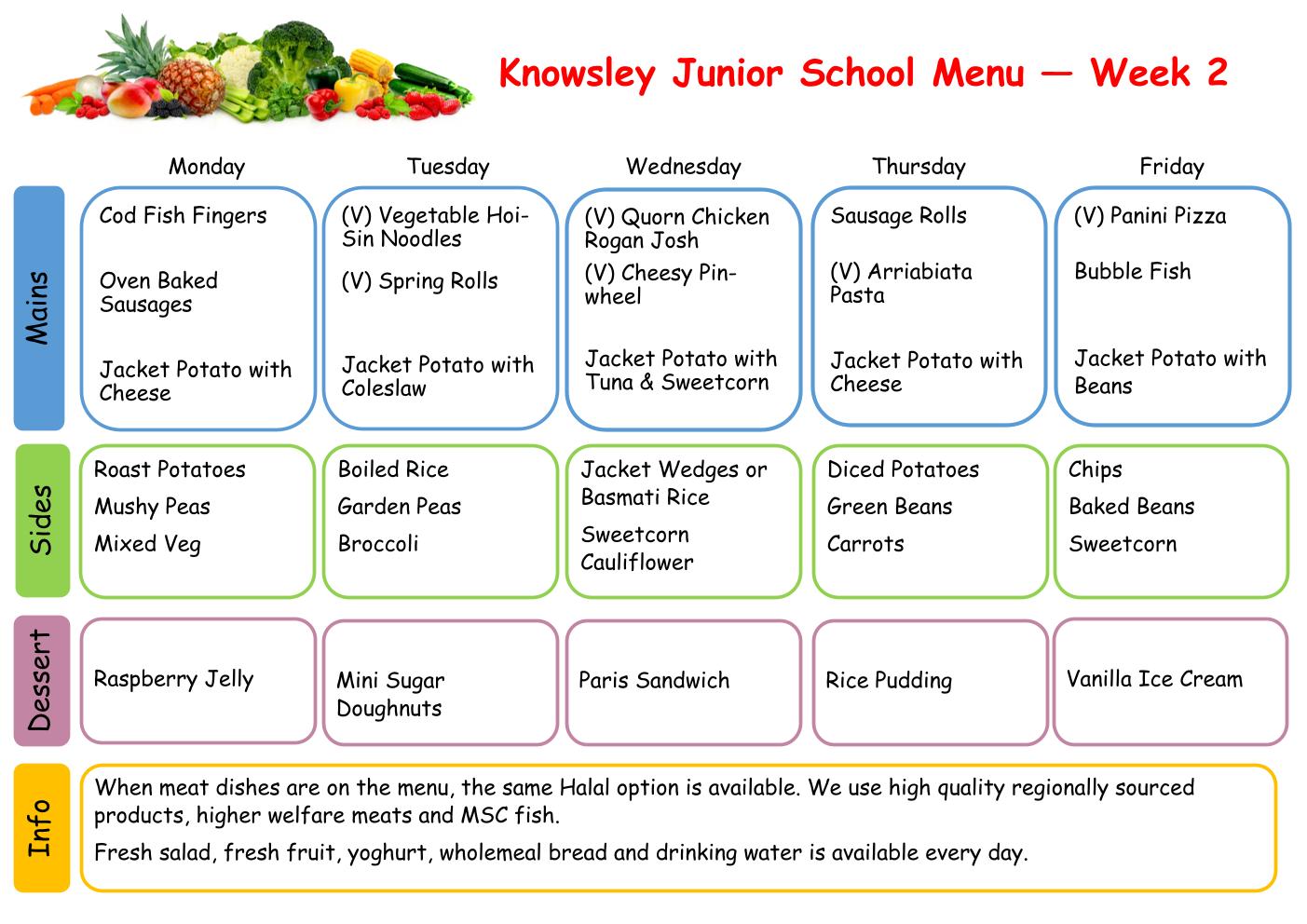
School Dinner Menus



Free School Meal Eligibility
Check if your child can get free school meals in England and find out how to apply on your local authority’s website.
 |
Oldham Council - Free School Meals |

Break
At Knowsley, we are dedicated to supporting the health and well-being of our children. As part of our commitment to maintaining a healthy school environment, and in line with Healthy Schools’ guidelines, we encourage children to enjoy a variety of nutritious, balanced snacks that will fuel them throughout the school day. We aim for a commonsense approach to snacks, encouraging healthy choices, therefore, chocolate, sweets, and crisps are not permitted during break time. Due to allergies, any snacks, food or drink consumed in school must not contain sesame, nuts or nut-based products. Our recommendations for snacks that your child may bring to school for break time include the following:
Vegetable sticks, such as celery, cucumber, peppers, and carrots. A colourful selection provides a variety of vitamins and minerals.
Cheese – a piece of cheese or a Babybel is a good source of calcium and protein.
Fresh or dried fruit – rich in fibre and vitamins, fruits like mango, kiwi, raisins, apricots, blueberries and bananas make a tasty, natural snack.
Fruit bars or fruit sticks.
Squeezy yoghurts.
Carbohydrate-based snacks, such as breadsticks, plain pretzels, banana bread, croissants, brioche, malt loaf, oat or rice cakes and small pitta breads. These provide energy to help sustain children between meals.
Packed Lunches
For children choosing to bring a packed lunch, please ensure that you provide healthy food and drinks.
Please note: Fizzy drinks and items containing nuts, sesame or pineapple are not allowed.
At Knowsley we value the importance of a healthy lifestyle and encourage all the children to make healthy choices. We follow food standard guidelines for school dinners and ask that packed lunches follow the same rules.
Please see the below list of acceptable foods that can be put in your child’s lunchbox:
- One portion of fresh fruit and one portion of fresh vegetables or salad every day.
- Meat, fish or another source of non-dairy protein should be included every day.
- Non-dairy sources of protein include lentils, kidney beans, chickpeas, hummus and falafel.
- An oily fish, such as salmon, should be included at least once every three weeks.
- A starchy food, such as bread or pasta, rice, couscous, noodles, potatoes or other cereals, should be included every day.
- A dairy food such as semi-skimmed or skimmed milk. Cheese, yoghurt, or fromage frais should be included every day.
- Water.
- Any packaged snacks must be 100 calories or less and no more than one per day.
- One plain cake or biscuit.
- Meat products such as sausage rolls, individual pies, corned meat, sausages and chipolatas can be included occasionally.
- Seeds, vegetables and fruit (with no added salt, sugar or fat).
- Savoury crackers or breadsticks.
- No crisps except baked.
- No chocolate of any kind, in biscuits, in cakes or spread.
- No fizzy drinks or cordial.
- No sweets.
- No nuts or peanut butter.
- All school dinners adhere to these guidelines and are planned by a dietician to offer children a healthy balanced daily meal. They follow strict guidelines and salt is not used in any of the preparation or cooking of the foods and sugar is kept to a minimum.
|
NHS - Healthier Lunchbox Ideas |